

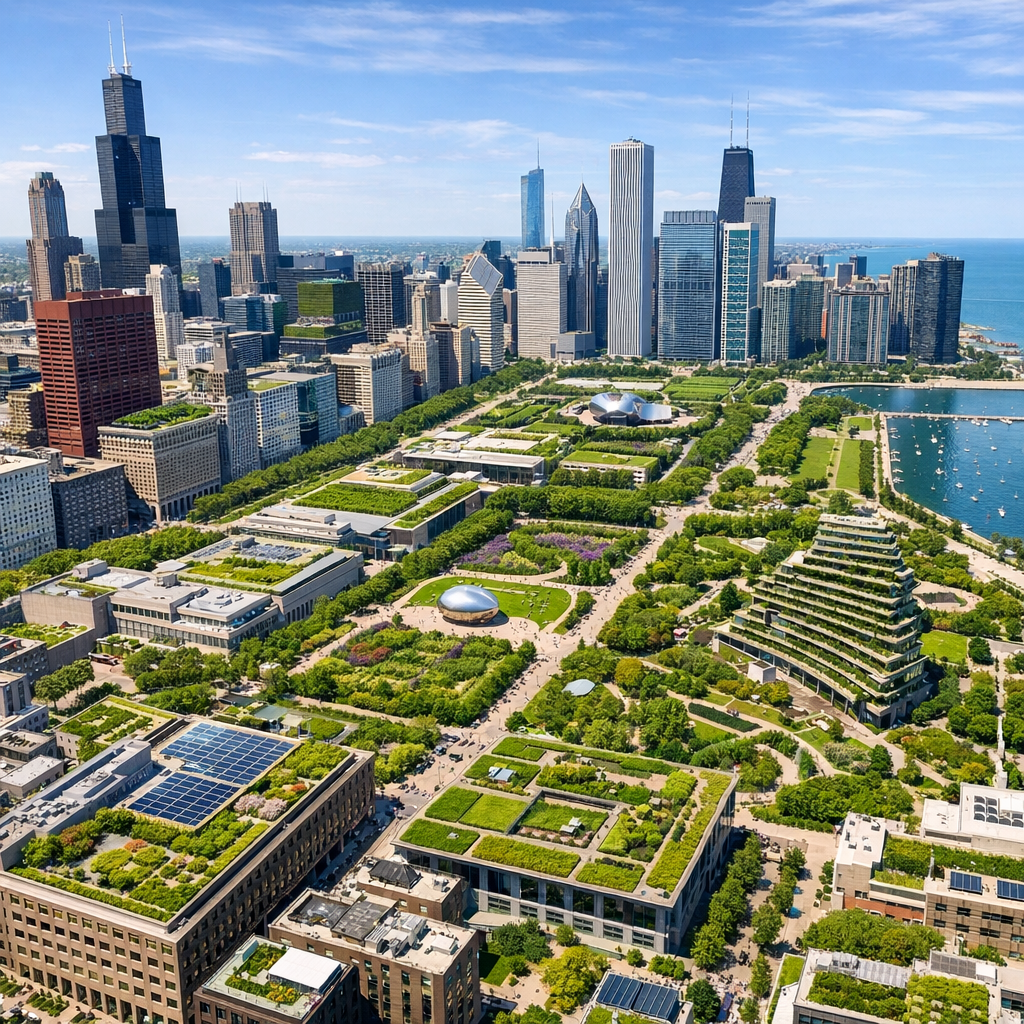
Chicago’s urban landscape, characterized by dense concentrations of buildings, roads, and other infrastructure, contributes to the urban heat island (UHI) effect. This phenomenon results in higher temperatures in urban areas compared to surrounding rural regions, impacting both the environment and public health.
Causes of the Urban Heat Island Effect
Several factors contribute to the UHI effect in Chicago:
- Reduced Natural Landscapes: The replacement of trees and vegetation with impervious surfaces like asphalt and concrete reduces the natural cooling effects of shade and evapotranspiration.
- Urban Material Properties: Materials commonly used in urban environments absorb and retain more heat than natural surfaces, leading to increased temperatures.
- Urban Geometry: The design and spacing of buildings can limit airflow, trapping heat and reducing the cooling effects of wind.
- Human Activities: Heat generated from vehicles, air conditioning units, and industrial processes adds to the overall temperature increase in urban areas.
Impacts on Chicago
The UHI effect in Chicago has several significant impacts:
- Increased Energy Consumption: Higher temperatures lead to greater demand for air conditioning, straining the electrical grid and increasing energy costs.
- Health Risks: Elevated temperatures can exacerbate heat-related illnesses, particularly among vulnerable populations.
- Environmental Concerns: Warmer urban temperatures can contribute to the formation of ground-level ozone, affecting air quality.
Mitigation Strategies
To combat the UHI effect, Chicago has implemented several strategies:
- Green Roofs: The city has encouraged the installation of green roofs, which provide insulation and reduce heat absorption. Notably, Chicago City Hall features a green roof as part of these efforts.
- Urban Green Spaces: The Chicago Park District manages extensive green spaces, offering cooling areas and promoting biodiversity.
- Cool Pavements: Utilizing materials that reflect more sunlight and absorb less heat helps lower surface temperatures.
- Tree Planting Initiatives: Increasing the urban tree canopy provides shade and enhances evapotranspiration, contributing to cooler urban environments.
By understanding the causes and impacts of the UHI effect, and through the implementation of targeted mitigation strategies, Chicago aims to create a more sustainable and comfortable urban environment for its residents.