
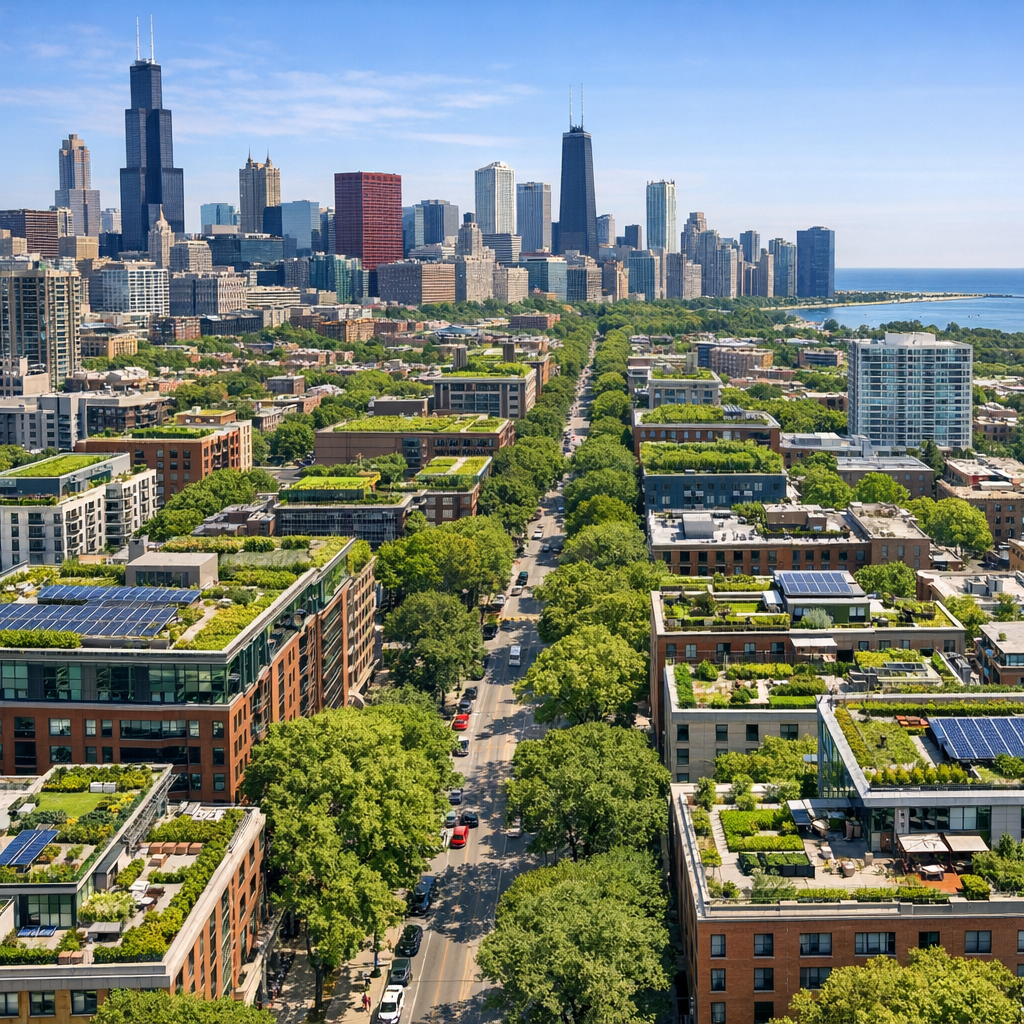
Chicago’s skyline, with its towering buildings and expansive concrete surfaces, is a testament to urban development. However, this architectural marvel contributes to a phenomenon known as the Urban Heat Island (UHI) effect, where urban areas experience higher temperatures than their rural counterparts.
What is the Urban Heat Island Effect?
The UHI effect occurs when natural landscapes are replaced with materials like asphalt and concrete that absorb and retain heat. This leads to elevated temperatures in urban areas, especially during the night. Factors such as building density, lack of vegetation, and human activities further intensify this effect.
Chicago’s Experience with UHI
In Chicago, the UHI effect is particularly pronounced. Studies have shown that neighborhoods with higher percentages of impervious surfaces and lower tree canopy cover experience significantly higher nighttime temperatures. For instance, research indicates that at 2 a.m., the percentage of impervious surfaces and tree canopy in an urban block can explain 68% of the variation in air temperature.
Implications for Residents
The elevated temperatures associated with the UHI effect can have several consequences:
- Health Risks: Increased temperatures can exacerbate heat-related illnesses, especially among vulnerable populations.
- Energy Consumption: Higher temperatures lead to increased use of air conditioning, resulting in higher energy bills and greater strain on the power grid.
- Environmental Impact: Elevated temperatures can affect local ecosystems and contribute to poorer air quality.
Mitigation Strategies
Addressing the UHI effect requires a multifaceted approach:
- Increasing Green Spaces: Planting trees and creating parks can provide shade and promote evaporative cooling, reducing local temperatures.
- Green Roofs: Installing vegetation on rooftops can help absorb heat and improve building insulation.
- Reflective Materials: Using materials that reflect rather than absorb heat for pavements and rooftops can reduce heat accumulation.
Chicago has already implemented several initiatives, such as promoting green roofs and expanding urban green spaces, to combat the UHI effect. Continued efforts and community involvement are essential to create a cooler, more sustainable urban environment.