

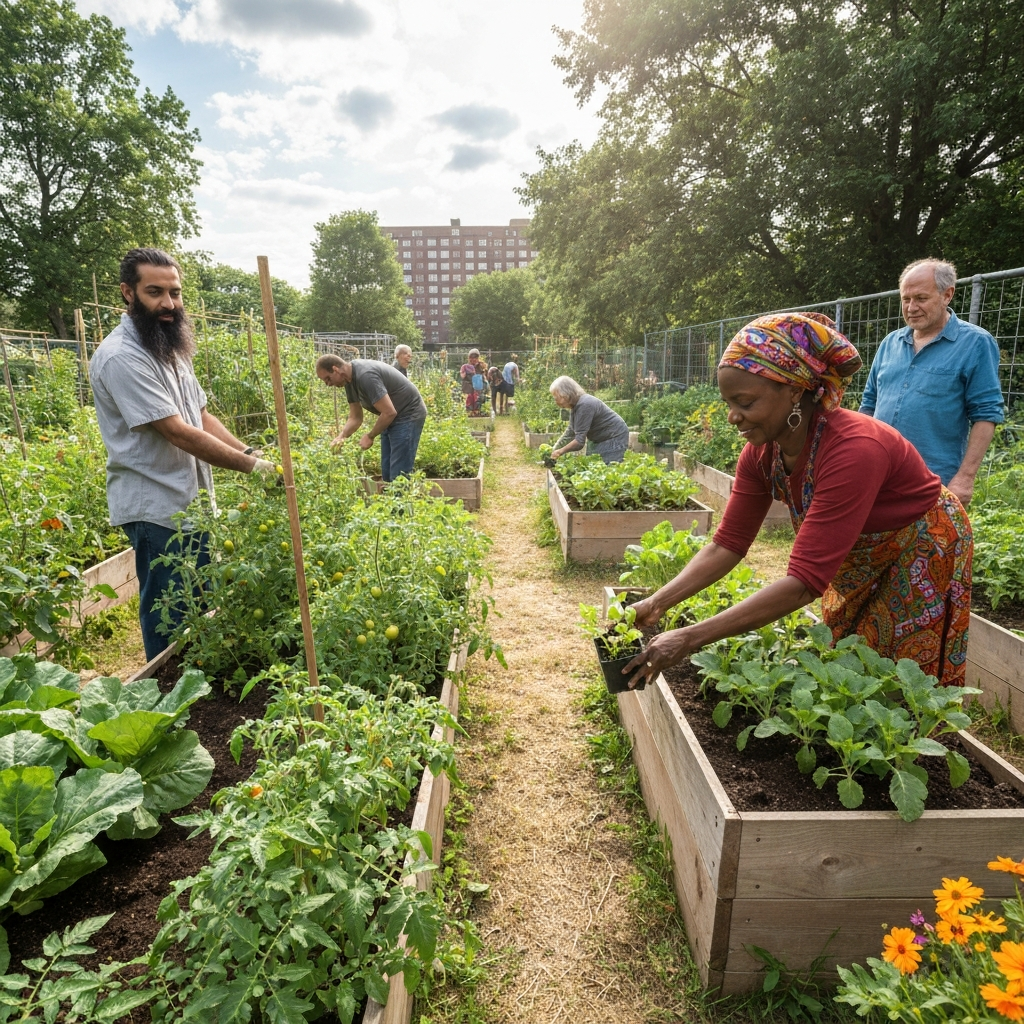
In the heart of Chicago, amidst its bustling streets and towering skyscrapers, community gardens serve as verdant sanctuaries where residents come together to cultivate not just plants, but also relationships and a shared sense of purpose. These gardens are more than plots of land; they are vibrant hubs of community engagement, education, and environmental stewardship.
The Essence of Community Gardens
Community gardens in Chicago offer residents the opportunity to grow their own food, learn about sustainable practices, and connect with neighbors. Managed and maintained by local volunteers, these spaces reflect the diverse cultures and traditions of the city’s neighborhoods. For instance, the Wicker Park Community Garden, occupying 10,000 square feet, features sustainable and native plants designed to provide year-round interest and support local wildlife. This garden is managed by the Wicker Park Garden Club and is a testament to community-driven initiatives. [Source]
Education and Sustainability
Beyond providing fresh produce, community gardens serve as educational platforms. The Community Roots Demonstration Garden at Skinner Park offers Chicagoans of all ages greater access to gardening education, teaching about native species, pollinating plants, composting, and other topics that inform and excite both seasoned and novice gardeners. [Source]
Building Resilient Communities
Organizations like NeighborSpace, Chicago’s only nonprofit urban land trust, play a crucial role in preserving and sustaining these gardens. By providing resources such as property ownership, insurance, water, and stewardship support, NeighborSpace enables community groups to focus on gardening and community-building visions, generating food, beauty, play, health, and safety for their neighborhoods. [Source]
Getting Involved
For those interested in joining or supporting a community garden, the Chicago Community Gardeners Association (CCGA) offers a network of gardener-designed and gardener-led groups. CCGA supports community gardens through education, networking events, and material resources, helping to find solutions to common challenges such as leadership transitions, access to water and land, and community organizing. [Source]
Community gardens are more than just spaces for planting; they are vital components of Chicago’s urban fabric, fostering community spirit, promoting sustainability, and enhancing the quality of life for residents. Whether you’re a seasoned gardener or a curious newcomer, these green spaces offer a place to grow, learn, and connect.