

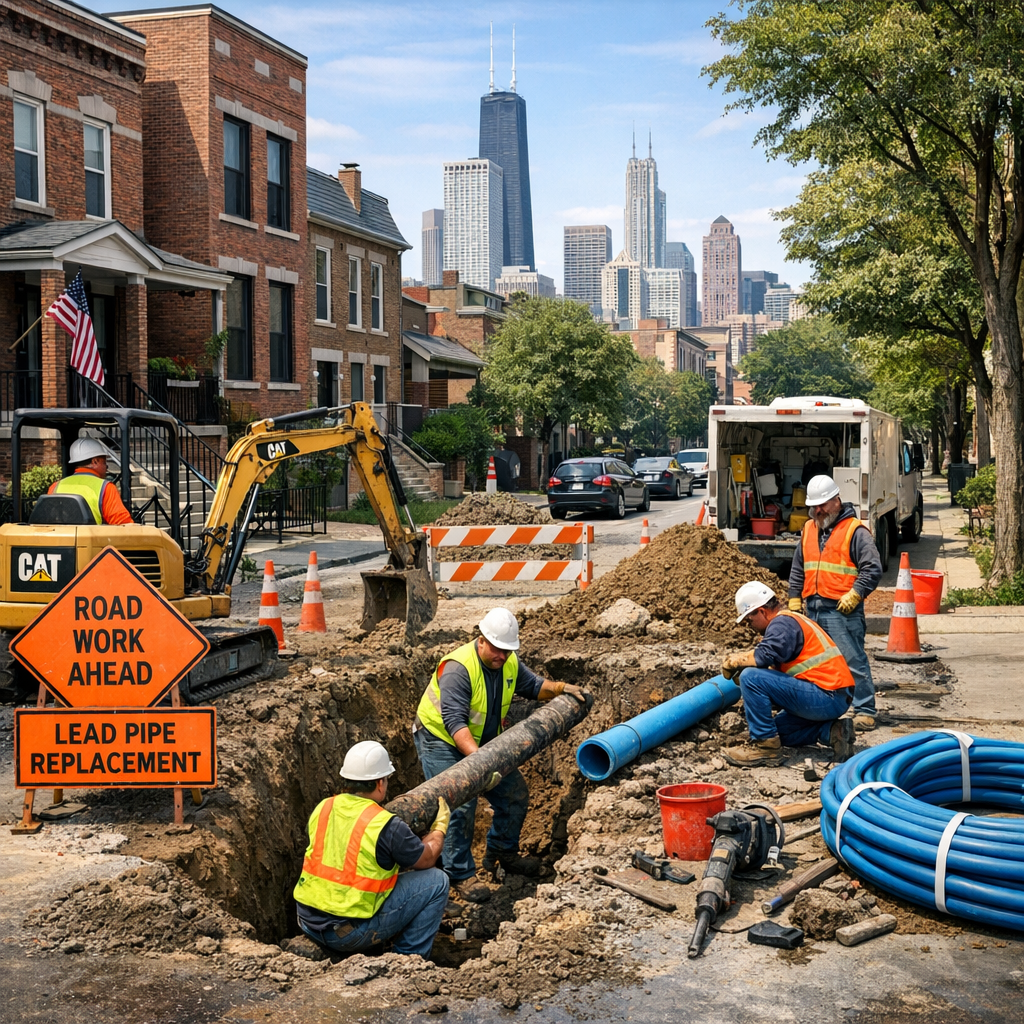
Chicago is facing a significant public health challenge with its aging lead service lines, which pose serious health risks to residents. The city’s plan to replace these pipes is commendable, but recent analyses reveal that Chicago’s costs are substantially higher than those of neighboring suburbs, prompting concerns about efficiency and equity.
Disparities in Replacement Costs
Suburbs such as Evanston, Elgin, and Riverside have managed to replace lead service lines at costs ranging from $9,200 to $15,000 per line. In contrast, Chicago’s average cost per line is approximately $31,000. This stark difference raises questions about the factors contributing to the higher expenses in the city.
Factors Influencing Costs
Several elements contribute to the cost disparities:
- Permit Fees: Suburbs often waive permit fees for lead pipe replacements, reducing overall costs.
- Project Planning: Coordinated group replacements on single blocks in suburbs lead to economies of scale.
- Contractor Policies: Suburban policies may be more contractor-friendly, facilitating smoother operations.
In contrast, Chicago’s approach has been criticized for a lack of transparency and higher expenses, even surpassing cities like New York. The influence of local unions and political dynamics may also play a role in these elevated costs.
Equity Concerns
Beyond financial considerations, there are significant equity issues. Majority Black and Latino neighborhoods in Chicago bear the brunt of the lead pipe problem, exacerbating existing health disparities. Ensuring that these communities receive timely and affordable replacements is crucial for public health and social justice.
Moving Forward
As Chicago embarks on a $12 billion lead pipe removal project over the next two decades, starting in 2027, it is imperative to adopt more efficient practices. Learning from suburban strategies, increasing transparency, and addressing systemic inequities will be vital steps toward safeguarding the health of all Chicagoans.