

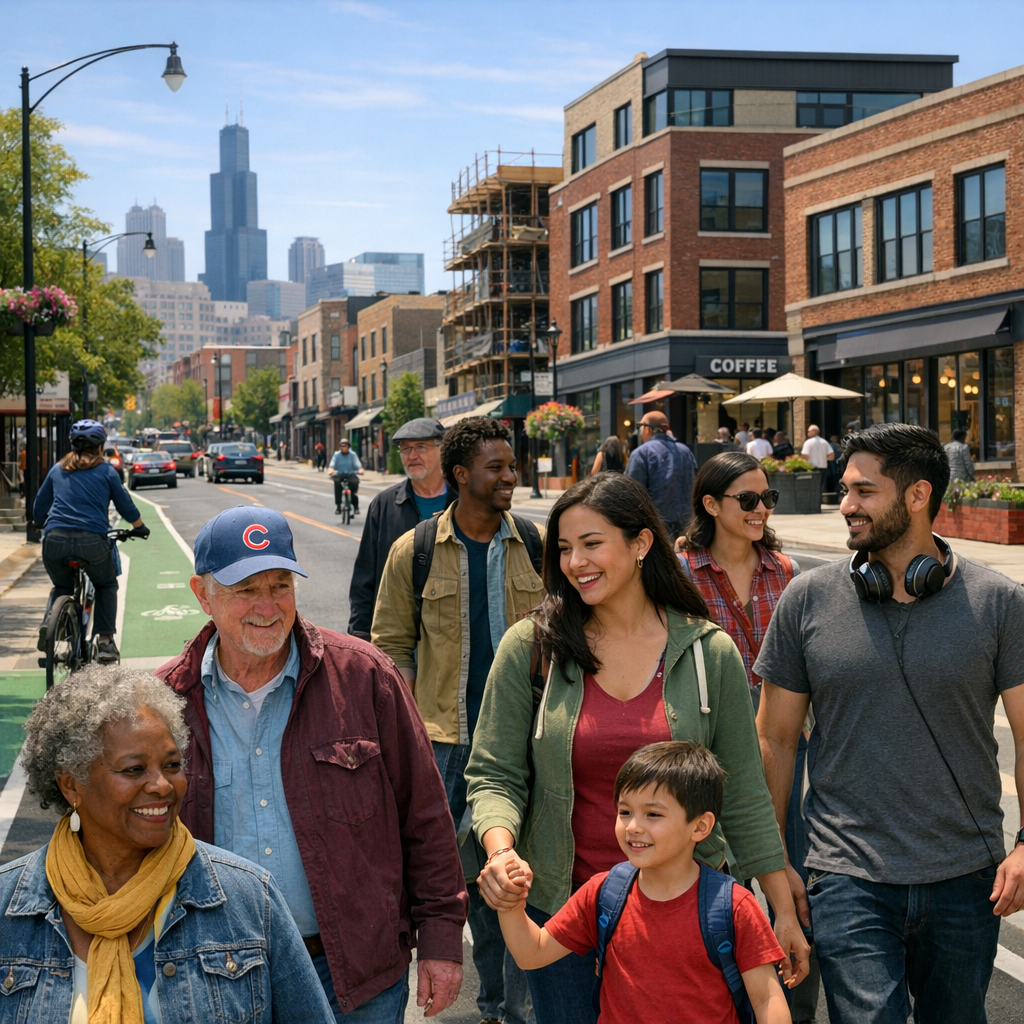
Chicago’s neighborhoods are experiencing significant demographic shifts, reflecting broader trends in urban living and community development. These changes are influencing various aspects of city life, from education to housing and public services.
Rising White Student Enrollment in Chicago Public Schools
Between 2010 and 2025, Chicago Public Schools (CPS) saw a notable increase in white student enrollment, with numbers rising by 2,630 students. This 7% uptick occurred despite an overall 19% decline in the city’s under-18 population during the same period. Demographer Rob Paral attributes this trend to a segment of educated individuals who prefer city living. The expansion of selective-enrollment schools may also be attracting families seeking quality education options. However, the racial composition of CPS students still does not fully reflect the city’s overall demographics, where white residents constitute about 32% of the population. These enrollment changes come as CPS faces a significant budget deficit of $732 million for the upcoming fiscal year. Source
Community Responses to Infrastructure Changes
As Chicago expands its network of protected bike lanes, some neighborhoods are expressing concerns over the loss of parking spaces. In areas like Brighton Park, West Town, and Logan Square, residents have protested the removal of parking to accommodate new bike lanes. In Brighton Park, community pushback led the city to reverse part of a bike lane to restore parking. City officials emphasize that these projects aim to address longstanding safety concerns and are developed with community input. Despite some modifications in response to protests, the city remains committed to expanding protected bike lanes citywide. Source
Economic Challenges and Housing Stability
Economic hardship continues to affect many Chicagoans, particularly in the South and West Sides. According to the Financial Health Network Chicago Pulse report, more than half of Black and Latino respondents reported being unable to pay all their bills on time, compared to 18% of white respondents. Additionally, 47% of renters in Chicago spend more than 30% of their household income on rent and utilities, classifying them as “cost-burdened.” These financial strains contribute to housing instability and a rise in homelessness. In 2024, the Chicago Point-in-Time Count estimated 18,836 people experiencing homelessness on any given day, over three times the number from 2023. This increase is largely attributed to the influx of asylum seekers since August 2022. Source
Addressing Community Safety
Gun violence remains a pressing issue in Chicago, with significant impacts on individuals, families, and communities. The direct costs of gun violence to the region are estimated at over $3 billion annually, including healthcare costs, police work, victim support, prosecution, and incarceration. Safety concerns influence how people live and feel in their communities, challenging the economy and overall quality of life. While violence disproportionately occurs in Black and Latino neighborhoods, the effects are felt throughout the region. Efforts to address community safety include initiatives targeting the root causes of violence and promoting economic stability. Source
Understanding these demographic and economic shifts is crucial for developing policies and programs that address the evolving needs of Chicago’s diverse communities. By fostering inclusive growth and equitable access to resources, the city can work towards a more stable and prosperous future for all residents.