

By Sophia Brown
Transit fixes take center stage
The Chicago Transit Board recently approved design agreements with the Illinois Department of Transportation aiming to address the long-standing “slow zones” along the Blue Line’s Forest Park branch. Many riders have been affected by frequent slowdowns between the Illinois Medical District and Forest Park, where track deterioration has been a persistent issue. The improvements also include making stations fully ADA-compliant and enhancing drainage along the line. Construction funding is still being worked out.
Pilsen TIF ceiling raised dramatically
The City Council’s Finance Committee advanced an amendment that increases the Tax Increment Financing (TIF) spending ceiling for the Pilsen district from around $115 million to $830 million—for the remaining life of the TIF—but does not expand its geographic boundaries. This move provides much more flexibility to fund local infrastructure, while keeping concerns around displacement under careful scrutiny.
Shifting non-emergency work off 911
A new pilot ordinance led by alderpersons in the 8th and 19th districts would move responsibility for certain parking violations—such as blocking driveways or fire hydrants—from the Chicago Police Department to the Department of Finance. Those violations would be handled via 311, in hopes of easing 911 call volume and freeing up police resources for emergencies.
Improving oversight and access to city government
The Community Commission for Public Safety and Accountability (CCPSA) continues to expand its role in policing oversight across Chicago, supported by 22 district-based councils to give neighborhoods more voice in how public safety is managed. The Commission is also involved in efforts like a citywide Workforce Allocation Study to better align resources in the Police Department.
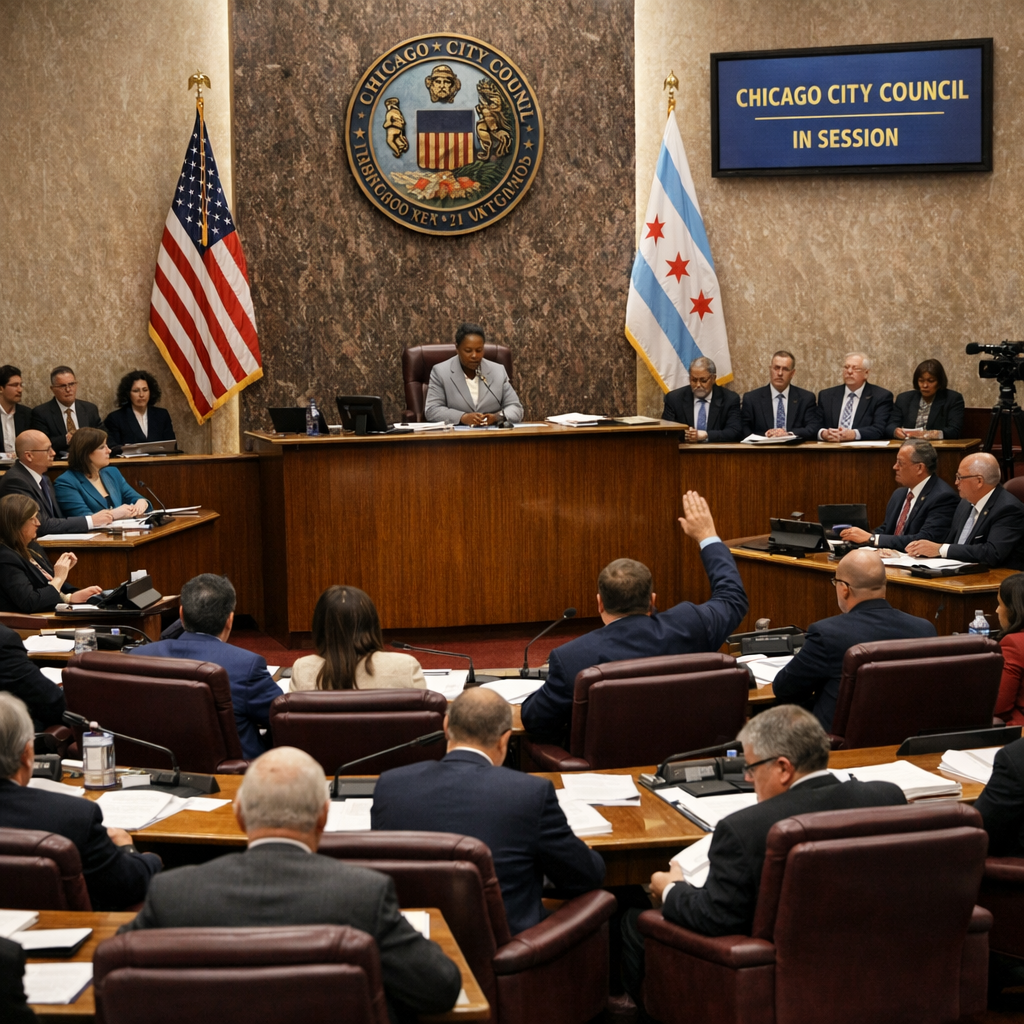
Meanwhile, Chicago City Council and its committees adopted a rule change requiring that recordings of public meetings be made downloadable. That ensures residents can save and review meetings more easily and helps bolster transparency in governance.
What’s ahead
- Securing construction funding and timelines for Blue Line upgrades.
- Monitoring how resources are allocated in the Pilsen TIF, and watching for community input on spending priorities.
- Tracking the pilot’s implementation of moving parking violation enforcement to 311 and its impact on 911 call flow.
- Continued community engagement with CCPSA, especially around oversight, accountability, and response times.
These developments reflect multiple shifts in how Chicago handles transit investment, local budgeting, public safety, and civic engagement—steps that may shape how neighborhoods experience city services in years to come.