

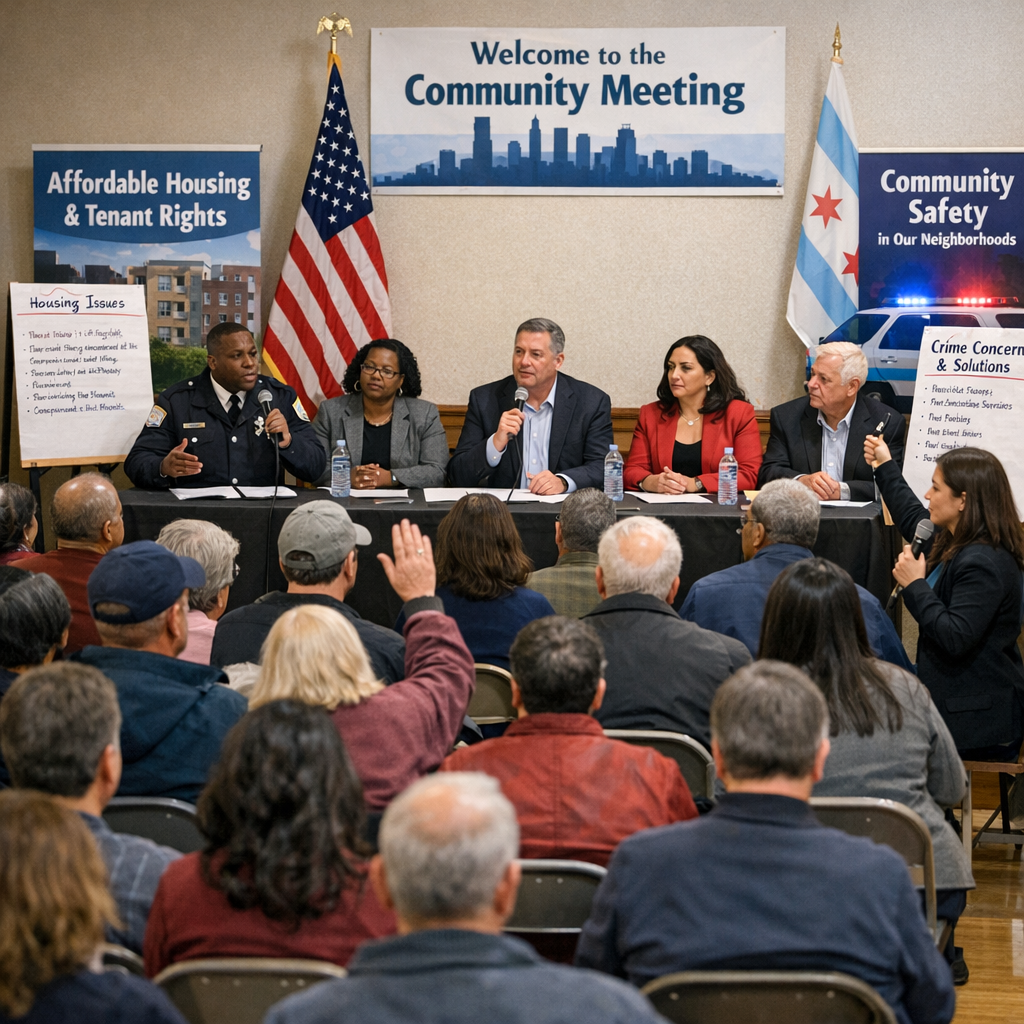
Chicago continues to grapple with significant challenges in housing, public safety, and education, affecting many residents across the city. Community organizations and local leaders are actively working to address these issues and promote a more equitable environment for all.
Housing Instability and Affordability
Housing instability remains a pressing concern, particularly in the South and West Sides. Over 67% of households in neighborhoods like South Shore, Englewood, and Garfield Park are rent-burdened, spending more than 30% of their income on housing. This financial strain limits their ability to cover other necessities and contributes to the racial wealth and homeownership gap. To combat this, the city is funding new multifamily developments, supporting inclusionary housing through the Affordable Requirements Ordinance, and investing in permanent supportive housing. Additionally, the proposed Green Social Housing program aims to create sustainable and affordable housing with green features, modeled after successful initiatives in other cities.
Public Safety and Community Concerns
Public safety remains a critical issue, with gun-related violence being a top concern among residents. A survey revealed that 79% of Chicago adults ranked gun-related violence as a major issue affecting children’s health. This underscores the deep impact of community safety on child development and overall well-being.
In response, organizations like the Jewish Council on Urban Affairs (JCUA) are advocating for robust accountability of the Chicago Police Department and the expansion of non-carceral approaches to public safety. They emphasize the need for holistic strategies that address the root causes of violence and promote community-led solutions.
Educational Disparities and Enrollment Shifts
Education in Chicago is experiencing notable shifts. Between 2010 and 2025, while overall enrollment in Chicago Public Schools (CPS) declined sharply by 86,457 students, the number of white students increased by 2,630. This trend marks a reversal from historical patterns of white flight from urban public schools and reflects evolving urban demographics. Demographer Rob Paral suggests this change is largely driven by a segment of educated individuals with a preference for city living.
Despite this increase, the racial makeup of CPS students remains disproportionate to the city’s overall demographic, with only a fraction of the city’s 32% white population reflected in the schools. These changing enrollment figures come as CPS begins its 2027 budgeting process, facing a significant $732 million deficit.
Community-Driven Solutions
Addressing these multifaceted challenges requires collaborative efforts. Organizations like the Chicago Community Trust are working towards a future with a strengthened safety net of essential services across Cook County. Their initiatives focus on housing stability, community safety, and responding to unexpected crises, aiming to enhance individual and community stability and economic security.
By fostering partnerships between community organizations, policymakers, and residents, Chicago can develop and implement strategies that address these persistent issues, paving the way for a more equitable and thriving city.