

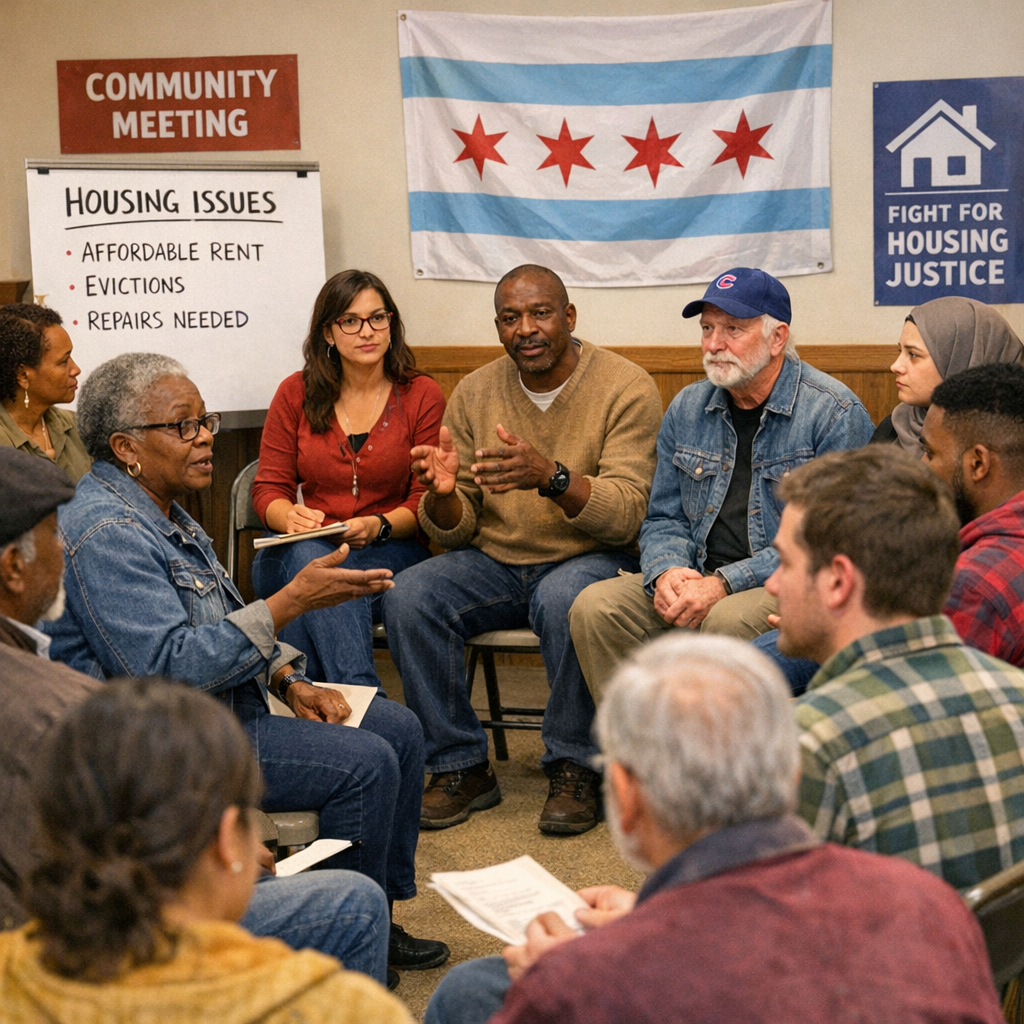
Chicago’s housing crisis remains a pressing issue, with many residents struggling to find affordable and stable living conditions. Recent data indicates that 47% of renters in the city allocate more than 30% of their household income to rent and utilities, classifying them as ‘cost-burdened’ due to excessive housing costs. This financial strain disproportionately affects Black and Latino communities, particularly on the South and West Sides, where over 67% of households in neighborhoods like South Shore, Englewood, and Garfield Park face significant rent burdens.
Community Initiatives and City Efforts
In response to these challenges, various community organizations and city departments have been working collaboratively to address the housing crisis. The Chicago Community Trust, for instance, has been actively supporting programs that enhance housing stability and economic security. Their Critical Needs strategy focuses on providing essential services such as housing, food, and other fundamental human services to residents across Cook County.
Additionally, the city has been exploring innovative solutions like the proposed Green Social Housing (GSH) program. Modeled after successful initiatives in other cities, this program aims to create sustainable and affordable housing equipped with green features such as electric heat pumps, solar panels, and passive building technologies. The establishment of an independent nonprofit, the Residential Investment Corporation (RIC), is under consideration to spearhead this initiative.
Community Voices and Concerns
Despite these efforts, many residents feel that more immediate action is necessary. Community leaders emphasize the need for increased investment in affordable housing developments and more robust policies to protect tenants from displacement. The Chicago Alliance for Collaborative Effort (CACE) highlights the importance of partnering with public and private collaborators to enhance services and expand the geographic footprint of housing initiatives.
Furthermore, the Chicago Center for Health and Environment (CACHET) underscores the significance of addressing environmental factors that impact housing quality. Their Community Engagement Core works with underserved communities to identify and mitigate environmental hazards, ensuring that housing solutions are not only affordable but also safe and healthy.
Looking Ahead
As Chicago continues to grapple with its housing crisis, the collective efforts of community organizations, city officials, and residents will be crucial in developing sustainable solutions. By fostering collaboration and prioritizing the needs of the most affected communities, the city can work towards ensuring that all Chicagoans have access to safe, affordable, and stable housing.