

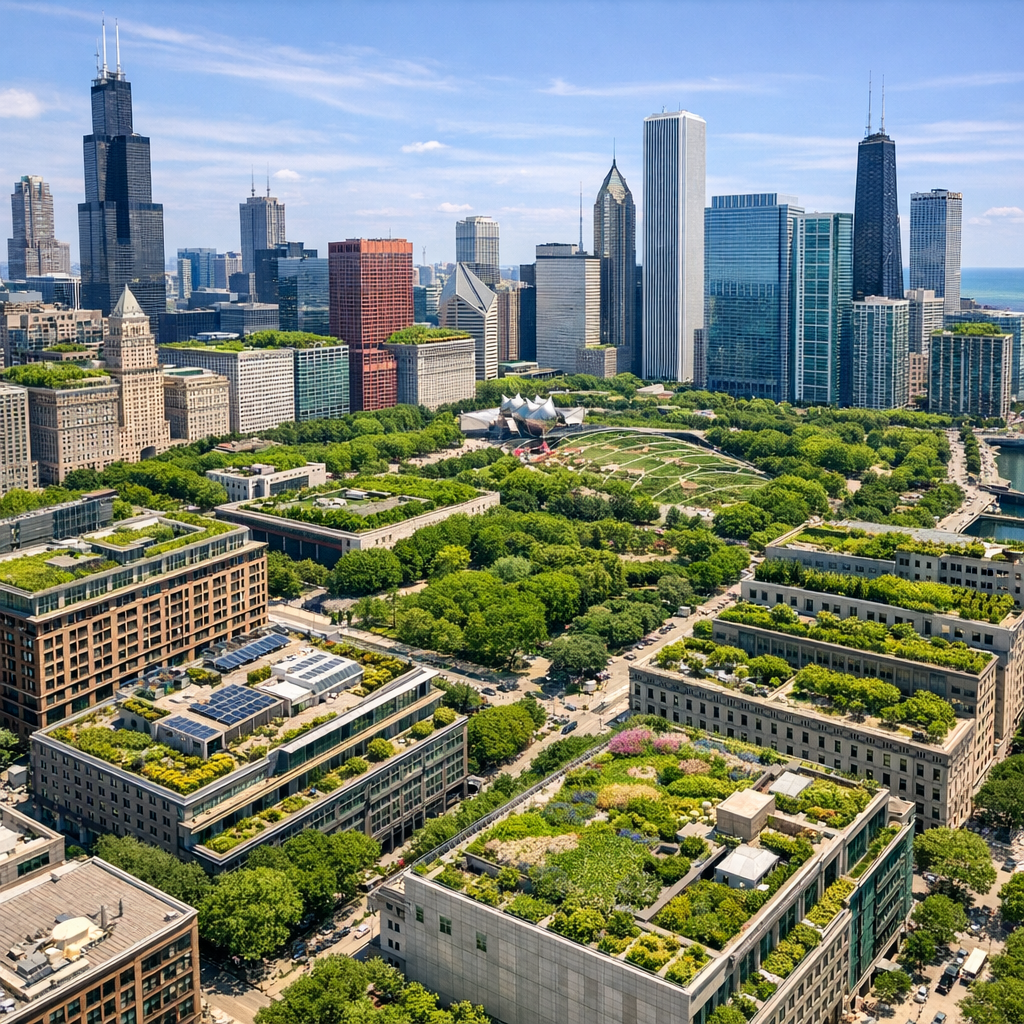
Chicago’s urban environment significantly influences local temperatures through the Urban Heat Island (UHI) effect, where city areas experience higher temperatures than surrounding rural regions. This phenomenon arises from factors such as extensive concrete and asphalt surfaces, reduced vegetation, and waste heat from buildings and vehicles.
Causes of the Urban Heat Island Effect
Materials like concrete and asphalt absorb and retain heat, leading to elevated temperatures in urban areas. The lack of vegetation reduces shade and evapotranspiration, further contributing to the UHI effect. Additionally, waste heat from automobiles, air conditioning, and industrial activities adds to the urban warmth.
Impacts on Chicago
In Chicago, the UHI effect is particularly noticeable during summer nights, when urban temperatures can be significantly higher than those in suburban or rural areas. This can lead to increased energy consumption for cooling, higher air pollution levels, and health risks, especially for vulnerable populations.
Mitigation Strategies
To combat the UHI effect, Chicago has implemented several strategies:
- Green Roofs: The city has promoted the installation of green roofs, including the notable example atop City Hall, to provide insulation and reduce heat absorption.
- Urban Forestry: Efforts to increase tree canopy cover aim to provide shade and enhance evapotranspiration, helping to cool urban areas.
- Cool Pavements: Utilizing reflective materials for pavements and rooftops can decrease heat absorption and mitigate the UHI effect.
These initiatives not only help in reducing urban temperatures but also improve air quality and enhance the overall livability of the city.
Community Involvement
Residents can contribute by planting trees, creating green spaces, and using energy-efficient appliances. Community engagement is crucial in amplifying the effectiveness of these mitigation strategies.
Understanding and addressing the Urban Heat Island effect is vital for Chicago’s resilience against climate change and for ensuring a healthier environment for all its residents.