

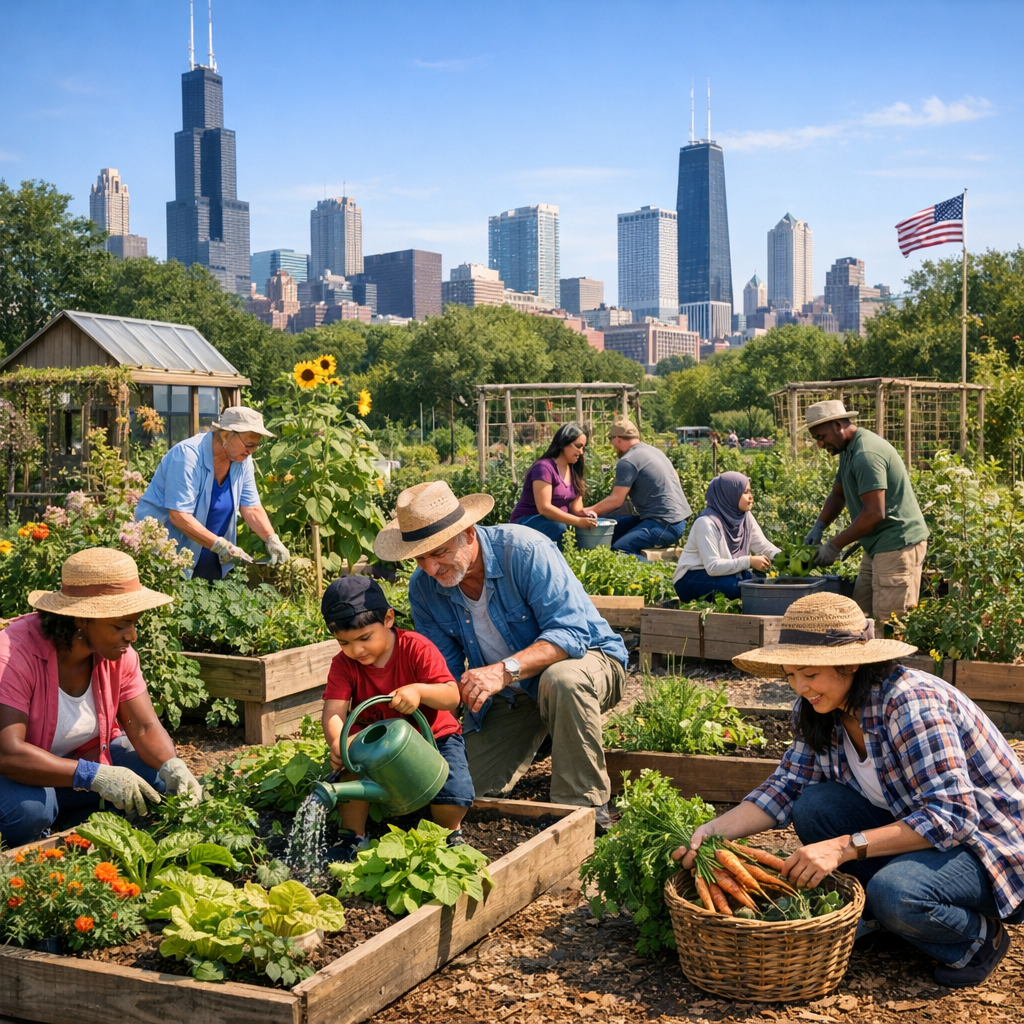
In the heart of Chicago, amidst the urban landscape, community gardens have emerged as vital spaces fostering unity, sustainability, and local engagement. These green oases not only provide residents with the opportunity to cultivate fresh produce but also serve as hubs for education, environmental stewardship, and social connection.
The Impact of Community Gardens
Community gardens offer numerous benefits to urban neighborhoods. They transform vacant lots into productive spaces, improve air quality, and provide habitats for local wildlife. Moreover, they promote healthy eating by increasing access to fresh fruits and vegetables, especially in areas where such resources are scarce.
Beyond the environmental and health advantages, these gardens strengthen community bonds. Neighbors collaborate, share knowledge, and build relationships, fostering a sense of belonging and collective responsibility.
Notable Community Gardens in Chicago
Chicago boasts a diverse array of community gardens, each with its unique character and mission. Here are a few noteworthy examples:
Eckhart Park Community Garden
Located at 1330 W. Chicago Ave., the Eckhart Park Community Garden includes public spaces around the park’s perimeter and a communal organic vegetable garden. Managed by the Friends of Eckhart Park, the garden invites both experienced gardeners and novices to participate in monthly gatherings from April through October. These sessions focus on weeding, grooming, and overall garden maintenance, providing an opportunity for community members to connect and learn from one another. For more information, interested individuals can contact FriendsofEckhartPark@gmail.com or visit their Facebook page: Neighbors & Friends of Eckhart Park.
Taylor Street Farms
Situated behind the Little Italy Branch of the Chicago Public Library at the intersection of Ada and Arthington streets, Taylor Street Farms features over 70 garden beds, a picnic area with an arbor, a community tool shed, floral gardens, an apiary for bees, and the Taylor Street Prairie. Recognized for its sustainability efforts, the farm is the first community garden in Chicago and Cook County to earn Conservation@Home status by the Forest Preserves of Cook County. Garden plots are available for rent on a first-come, first-served basis, with a commitment to organic gardening practices. Additionally, the farm dedicates plots to grow food for local shelters, regularly donating produce to Breakthrough Urban Ministries during the growing season.
Park 540 Community Garden
Located at 2440 South Dearborn Street within Park No. 540, this community garden is independently managed by the Park No. 540 Community Garden group. It provides a space for residents of the South Loop and adjacent neighborhoods to garden and enjoy ornamental and edible plants. The garden comprises 28 raised beds and aims to build a sense of community by offering beds to nonprofit organizations and individual households. Due to its popularity, there is a waitlist for interested gardeners. Non-active members are encouraged to volunteer and can get more information by emailing park540garden@gmail.com.
Ginkgo Organic Gardens
Established in 1994, Ginkgo Organic Gardens is a community pantry garden located in Chicago’s Uptown neighborhood. Operated entirely by volunteers, the garden employs sustainable agricultural practices to grow heirloom varieties of fruits and vegetables. All produce is donated to organizations serving individuals facing poverty and illness. The garden welcomes volunteers of all experience levels and provides opportunities to contribute to their mission of land stewardship and community service.
Getting Involved
For those interested in joining or supporting a community garden, there are several ways to get involved:
- Volunteer: Many gardens rely on volunteers for maintenance, planting, and harvesting. No prior experience is necessary, and it’s a great way to learn about gardening while contributing to the community.
- Rent a Plot: Some gardens offer individual plots for residents to cultivate their own plants. Availability may be limited, so it’s advisable to inquire about waitlists.
- Attend Workshops and Events: Community gardens often host educational workshops, social events, and workdays. Participating in these activities can enhance your gardening skills and connect you with like-minded individuals.
Organizations like NeighborSpace, Chicago’s only nonprofit urban land trust, play a crucial role in preserving and sustaining community gardens. They provide support through property ownership, insurance, water access, and stewardship, allowing community groups to focus on gardening and community-building efforts.
Community gardens are more than just plots of land; they are vibrant spaces where individuals come together to cultivate not only plants but also relationships and a shared sense of purpose. By participating in or supporting these gardens, residents contribute to the health, beauty, and cohesion of Chicago’s neighborhoods.